Blog › Skin Care
Skin CarePico vs Q-Switch Laser: Which is Better for Pigmentation?
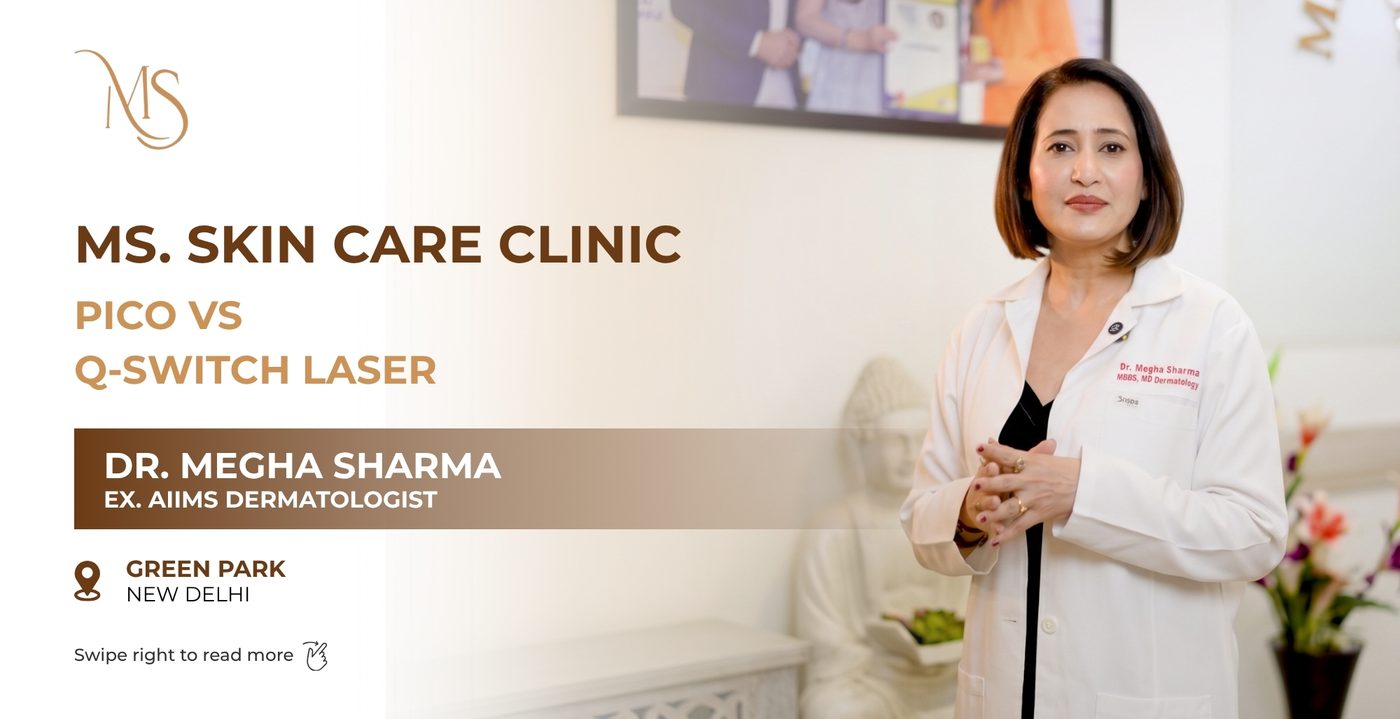
You’ve probably been there: it’s a Sunday evening, you’re standing in front of the bathroom mirror, and those stubborn dark patches on your cheeks are staring back at you again.
After months of creams and home remedies, you finally decide it’s time for something stronger. Then comes the real question: pico or Q-switch? Everyone seems to have a different opinion.
If you’re searching for pico laser treatment in Delhi, you’ve likely noticed how confusing the choices can get. Both lasers promise clearer skin, but they work quite differently, and the right one depends on your pigmentation type, skin tone, and patience.
Let’s break it down simply, so you can walk into your consultation feeling informed, not overwhelmed.
Pico vs Q-Switch Laser for Pigmentation: Comparison Table
| Factor | Pico Laser | Q-Switch Laser |
|---|---|---|
| Pulse duration | Picoseconds (trillionths of a second) | Nanoseconds (billionths of a second) |
| How it works | Shatters pigment into very fine particles using a mostly photoacoustic (pressure) effect | Breaks pigment using a stronger photothermal (heat) effect |
| Number of sessions | Usually fewer (often 3 to 5). Depends on the condition being treated, the device, and the patient’s response. | Usually more (often 5 to 8 or more). Depends on the condition being treated, the device, and the patient’s response. |
| Safety on darker skin | Generally gentler, with a lower risk of rebound pigmentation | Needs careful settings, as heat can trigger post-inflammatory hyperpigmentation |
| Discomfort | Mild, often described as light snapping | Slightly higher, sometimes a stinging sensation |
| Downtime | Minimal, with mild redness for a few hours to a day | Can be longer, with temporary darkening or flaking for several days |
| Skin rejuvenation | Can also improve texture, pores and fine lines | Mainly targets pigment |
| Cost per session | Higher | Lower |
| Overall cost | Can balance out because fewer sessions are needed | Lower per session, but more sessions add up |
Which Laser Is Better for Different Types of Pigmentation?
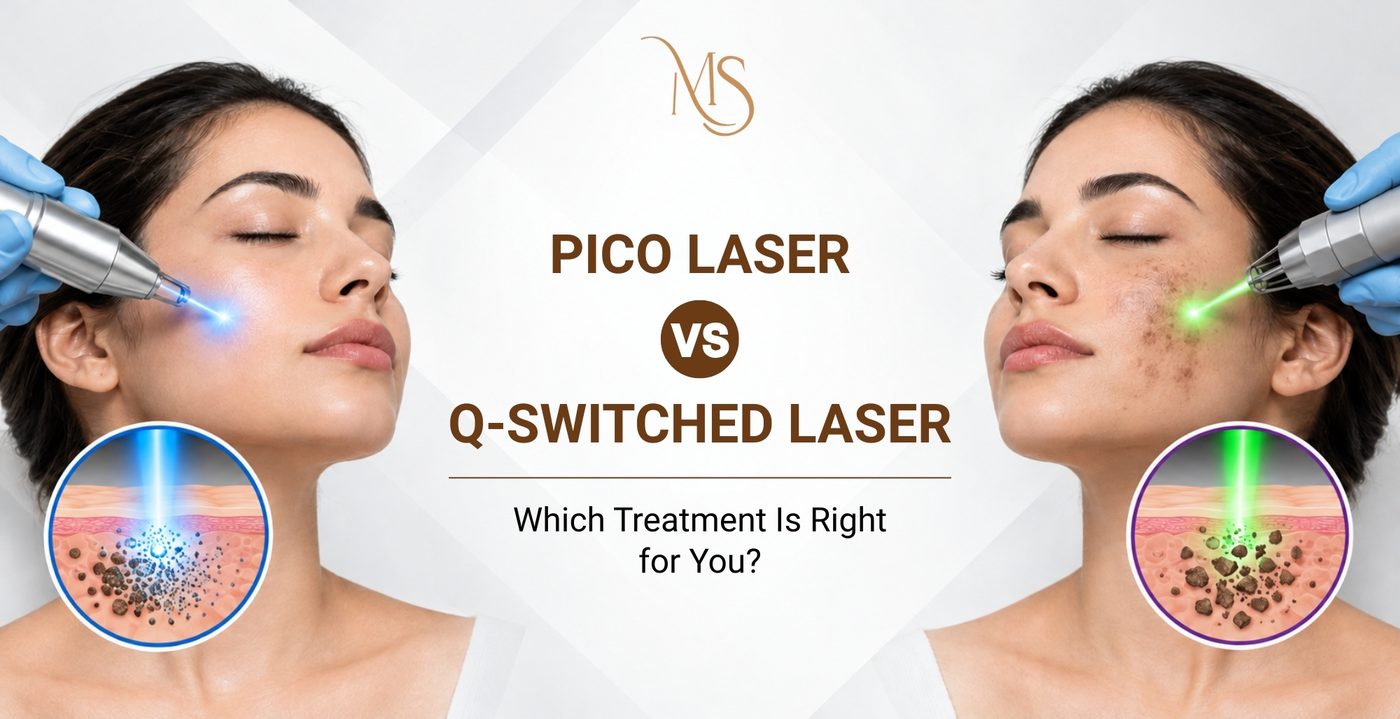
Not all pigmentation is the same. Sun spots, melasma, and dark acne marks may look similar, but they need different treatments. The right laser depends on your skin type and the cause of your pigmentation.
Pico vs Q-Switch Laser for Melasma Treatment in Delhi
| Factor | Pico Laser | Q-Switch Laser |
|---|---|---|
| How it works | Very fast pulses, little heat | Slightly slower pulses, may create some heat |
| Suitability for melasma | Often seen as a gentler option | Used with low settings and careful handling |
| Number of sessions | Often fewer, varies by person | Often more, varies by person |
| Comfort and recovery | Usually mild, quick recovery | Can feel a bit stronger, may take longer to settle |
| Cost per session | Usually higher | Usually lower |
For melasma, neither pico nor Q-switch laser is automatically the better choice. Melasma can recur and may worsen after laser treatment, particularly in darker skin tones. Dermatologists often begin with sun protection and appropriate topical treatments, considering laser treatment only in selected cases.
Pico vs Q-Switch Laser for Acne Marks and Dark Spots
| Factor | Pico Laser | Q-Switch Laser |
|---|---|---|
| How it works | Very fast pulses that break dark color into tiny pieces | Short pulses with a little more heat |
| Acne marks (flat, dark) | Often works well, gradual fading | Can also work well |
| Sun spots and freckles | Commonly effective | Commonly effective |
| Skin texture | Some people notice mild improvement | Mainly targets pigment |
| Number of sessions | Often fewer, varies by skin | Often more, varies by skin |
| Comfort and recovery | Usually mild, quick recovery | May cause a few days of mild flaking or darkening |
| Cost per session | Usually higher | Usually lower |
Which Laser Is Best for Pigmentation on Indian Skin?
There is no single best laser for every Indian skin type. Both Pico and Q-Switch lasers can help with certain types of pigmentation, but the right choice depends on the cause of the dark spots and the treatment settings. A dermatologist can assess your skin and recommend an option that balances results with the risk of irritation and further pigmentation.
Pico Laser Treatment in Delhi
Pico laser is a popular choice in Delhi for people dealing with dark spots, melasma and uneven skin tone. It uses very fast pulses of light to break the dark color into tiny pieces, and your body clears them away on its own over time.
Benefits
- Helps fade dark spots, sun spots, and acne marks
- Creates little heat, so it is often considered gentler on Indian skin
- Usually needs fewer sessions than older lasers
- Most people can get back to their routine quickly
- Some notice a mild improvement in skin texture and glow
Side Effects
- Mild redness or warmth for a few hours to a day
- Slight swelling or a tingling feeling
- Temporary dryness or light flaking
- In rare cases, dark patches can appear or come back, especially without sunscreen
- Going to an experienced dermatologist lowers the chances of problems
Q-Switch Treatment in Delhi
Q-switch is one of the older and more widely available lasers for pigmentation in Delhi. It sends short bursts of light that break the dark color into tiny pieces, and your body slowly clears them away. It is often chosen for simple, clearly defined spots.
Benefits
- Helps fade freckles, sun spots, and flat dark marks
- Widely available, so it’s easy to find a clinic
- Usually costs less per session than pico
- Well known and tested over many years
- Can also be used for some other pigment concerns, as advised by a doctor
Side Effects
- Redness or warmth for a few hours to a day
- Mild stinging or a snapping feeling during treatment
- Temporary darkening or light flaking of the treated spot for a few days
- In some cases, dark patches can appear or come back, especially if the skin gets too warm or isn’t protected from the sun
- An experienced dermatologist can adjust the settings to lower the risk
Pigmentation Treatment at MS Skin Clinic, Delhi
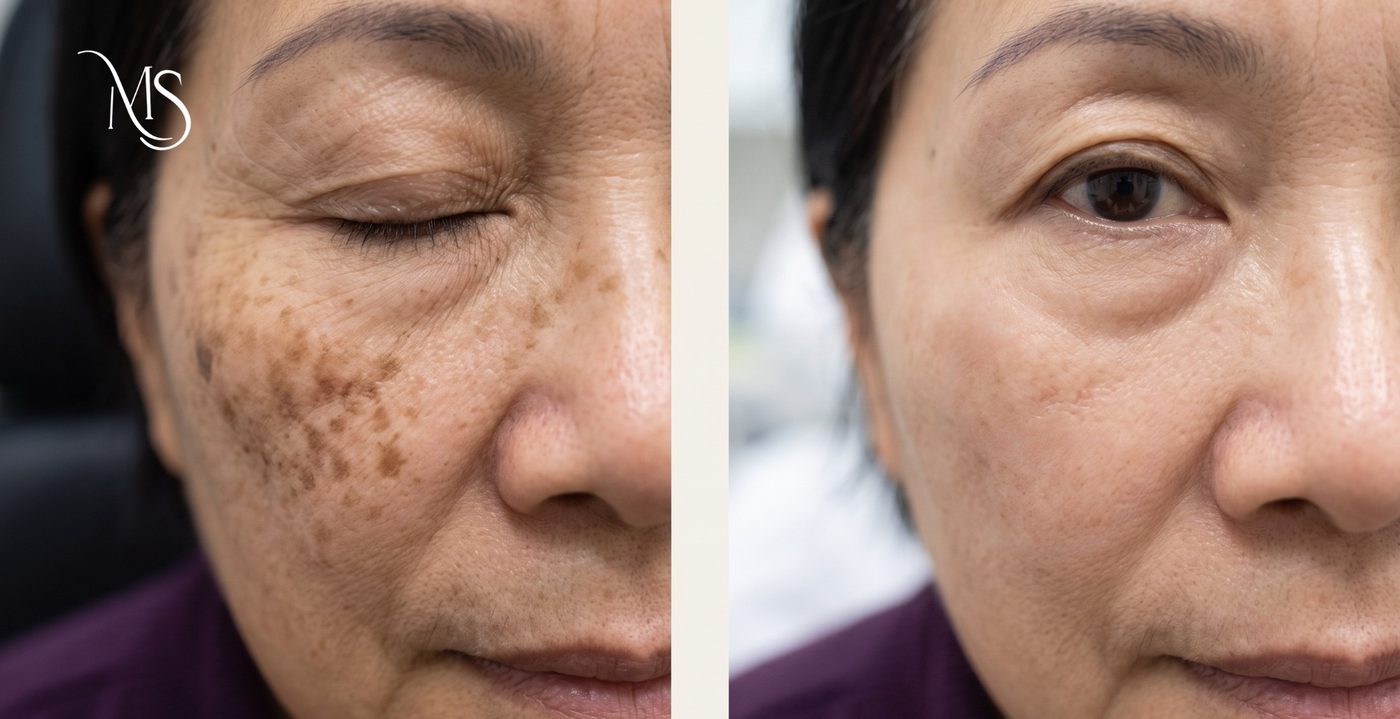
Dark spots, uneven skin tone, and stubborn marks are among the most common skin worries in India, and creams alone rarely clear them. At MS Skin Clinic in Green Park, Dr. Megha Sharma (MD Dermatology, ex-AIIMS) doesn’t push a one-size-fits-all treatment. She first works out what kind of pigmentation you have and how deep it sits, then builds a plan around your skin. For many patients, that plan includes pico laser treatment in Delhi, along with peels and a home skincare routine.
How the Treatment Works
Pigmentation can come from sun exposure, hormones, or old pimples. Each type responds differently, so the first visit is all about understanding your skin.
- Your skin is checked with a Wood’s lamp and dermoscopy to see the type and depth of pigmentation
- Your skin type is noted, so the treatment stays safe for Indian skin tones
- A home routine with depigmenting creams is usually suggested
- In-clinic options like pico laser, Q-switch, chemical peels or Cosmelan are matched to your concern
- Daily sunscreen (SPF 50+) is a must during and after treatment
- A maintenance plan helps keep the pigmentation from coming back
Meet the Doctor
Dr. Megha Sharma is an MD in Dermatology and a former dermatologist at AIIMS, with more than 15 years of experience. She personally assesses every patient at MS Skin Clinic, so you’re not handed over to someone else after the first visit. Her approach is simple: understand your skin first, then choose the treatment. That means pigmentation is never treated with a one-size-fits-all plan, especially for Indian skin tones, which need extra care.
- MD Dermatology, ex-AIIMS dermatologist
- 15+ years of experience
- Rated 4.9 on Google
- Clinics in Green Park, New Delhi and Faridabad
Treatments Offered
| Concern | Treatment Options |
|---|---|
| Dark spots and sun spots | Pico laser, Q-switch laser, laser toning |
| Melasma | Cosmelan peel, chemical peels, pico laser, creams |
| Post-acne dark marks | Pico laser, chemical peels, depigmenting creams |
| Uneven skin tone and glow | IV glutathione, laser toning, clinical facials |
| Pitted acne scars | Fractional CO2, microneedling with PRP, subcision, TCA cross |
What to Expect at Your Consultation
- The clinic team replies to your booking request, often within about 30 minutes
- The doctor looks at your skin closely, using a Wood’s lamp and dermoscopy
- She identifies the type of pigmentation, how deep it is, and your skin type
- You get a plan that may include pico laser, peels, or a home routine with creams
Conclusion: Choosing the Right Laser for Pigmentation
Both pico and Q-switch lasers can work well for pigmentation, and neither is the right answer for everyone. The better choice depends on your pigmentation type, how deep it sits, your skin tone, and your budget. Pico may suit people who want fewer sessions and a gentler experience, while Q-switch can be a good fit for simple, well-defined spots at a lower cost per session. Whichever you consider, the settings and the doctor’s experience matter as much as the machine. A skin check with a dermatologist is the best way to find what suits you.
Ready to Meet Dr. Megha Sharma?
Based in Green Park, Delhi. Book a consultation for dark spots, melasma or uneven skin tone.
Book ConsultationFrequently Asked Questions
1. Pico Laser treatment in Delhi vs Q-Switch Laser for Pigmentation: Which Is Better?
Neither is better for everyone. Pico is often chosen for stubborn or sensitive pigmentation while Q-switch suits simple and well-defined spots. At MS Skin Clinic, Dr. Megha Sharma picks the laser after checking your pigmentation type and skin.
2. Is pico laser safe for Indian skin?
It is generally considered a suitable option when the right settings are used by an experienced dermatologist. Your skin type is assessed first so the treatment stays safe for you.
3. Can lasers fully treat melasma?
Melasma often improves, but it can return with sun, heat, or hormonal changes. Melasma treatment in Delhi usually combines laser with peels, creams, and daily sunscreen for better, longer-lasting results.
4. How many sessions will I need?
It depends on the type and depth of your pigmentation and how your skin responds. Most people need a few sessions spaced a few weeks apart, and results build up gradually.
5. Can pico laser help with acne scar removal?
Pico laser may help improve certain flat, dark marks left after acne. Pitted or indented acne scars usually need different treatments, such as fractional CO2 laser, microneedling or subcision, depending on the type of scar.
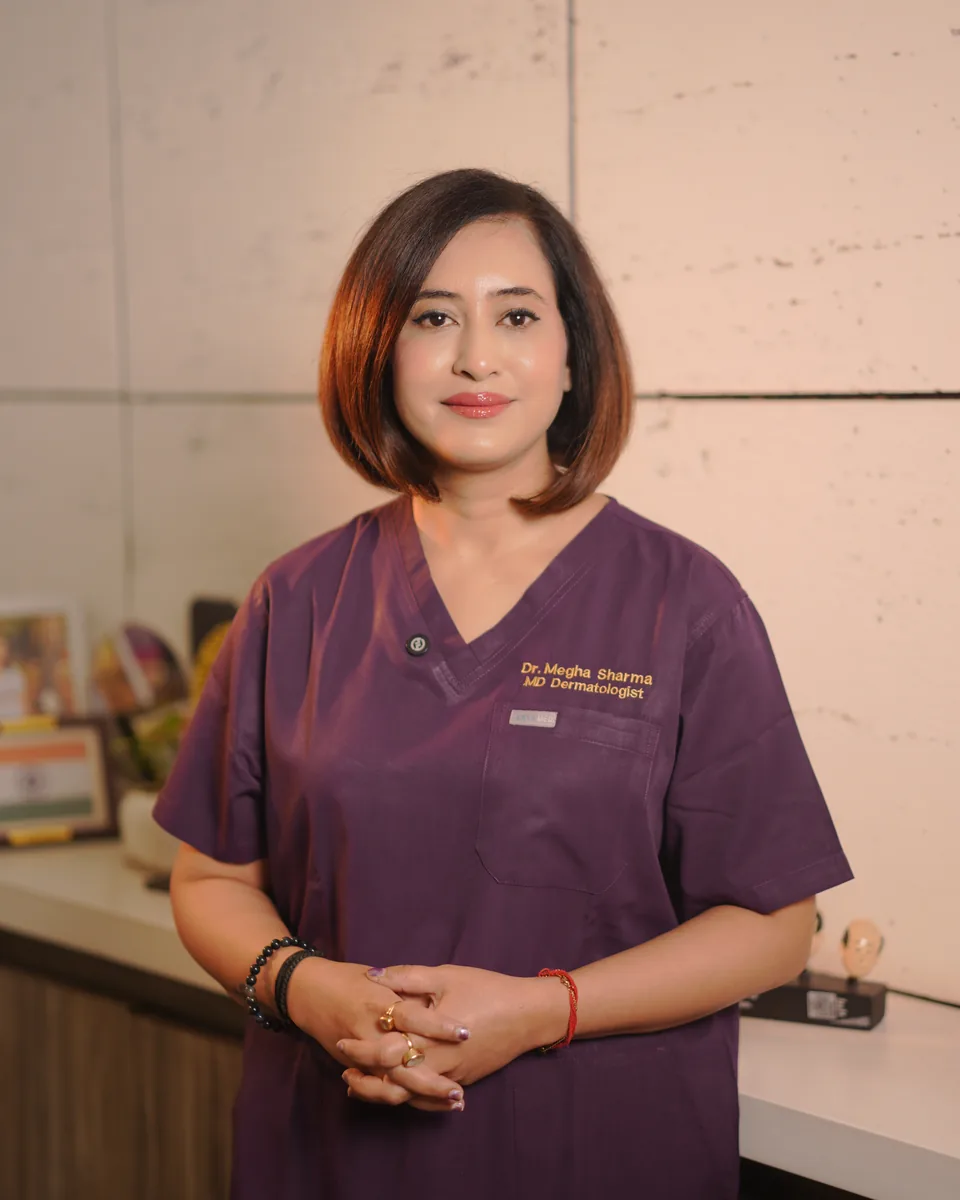
Meet Dr. Megha Sharma
Dr. Megha Sharma
MBBS · MD Dermatology · MISD · MIADVL · MACS · Ex- Dermatologist AIIMS
Dr. Megha Sharma is one of Delhi's most experienced and trusted dermatologists, with over 15 years of expertise spanning medical dermatology, aesthetic medicine, laser treatments, and hair transplant surgery.
A former Dermatologist at AIIMS — India's most prestigious medical institution — Dr. Megha brings unparalleled clinical depth and academic rigour to every patient interaction. She has performed thousands of skin, hair, and aesthetic procedures over her career, with a consistent focus on safety, natural results, and patient-centred care.
Professional Memberships
- IADVL — Indian Association of Dermatology, Venereology & Leprosy
- ISD — International Society of Dermatology
- ACSI — Association of Cutaneous Surgeons of India
- Joint Secretary, Dermatology Society of Faridabad (DSF)